If you’ve bought a modern TV, soundbar, or AV receiver recently, you’ve probably seen the letters eARC. But what does eARC actually mean — and does it really matter for your home theater sound?
The short answer: yes. eARC (canal de retorno de audio mejorado) is the feature that lets your TV send lossless, high-bitrate audio — including Dolby Atmos y DTS:X — back to your soundbar or receiver over a single Cable HDMI. Without it, you might be listening to compressed audio and not even know it.
This guide breaks down everything about eARC: what it is, how it compares to standard ARC, whether you need a special eARC HDMI cable, and how to set it up for the best lossless audio experience.
What Is eARC?
eARC significa Enhanced Audio Return Channel. It’s an evolution of the older ARC (canal de retorno de audio) feature introduced with HDMI 1.4.
Put simply, eARC lets a single Cable HDMI carry audio from your TV volver to a connected soundbar, AV receiver, or amplifier — while that same cable also carries video a your TV. It’s the connection that makes lossless Dolby Atmos y DTS:X possible without running extra audio cables.
The key upgrade with eARC is bandwidth and audio format support:
- Estándar ARC caps at roughly 1 Mbps — enough only for compressed formats like Dolby Digital.
- eARC supports up to 37 Mbps, which is enough for uncompressed, lossless audio like Dolby TrueHD y DTS-HD Master Audio.
That extra bandwidth is exactly why eARC is the modern standard for home theater sound.
ARC vs eARC: What’s the Difference?
If you’re deciding whether to upgrade your setup, here’s exactly how ARC y eARC compare:
|
Característica
|
ARC (canal de retorno de audio)
|
eARC (canal de retorno de audio mejorado)
|
|
Ancho de banda máximo
|
~1 Mbps
|
~37 Mbps
|
|
Formatos de audio
|
Compressed (Dolby Digital, PCM)
|
Lossless (Dolby TrueHD, DTS:X, Dolby Atmos)
|
|
5.1 / 7.1 Surround
|
Comprimido
|
Uncompressed
|
|
Dolby Atmos / DTS:X
|
No
|
Yes (high bitrate)
|
|
Lip-sync
|
Ajuste manual
|
Automatic sync
|
|
Requires HDMI 2.1 cable
|
No
|
Recommended (certified)
|
|
Lo mejor para
|
Older soundbars, basic setups
|
Home theaters, Atmos soundbars
|
Dolby Atmos & DTS:X: What Lossless Audio Really Sounds Like
|
Audio Format
|
Tipo
|
What eARC Delivers
|
|
Dolby Digital
|
Compressed (lossy)
|
Works with both ARC and eARC
|
|
Dolby Digital Plus
|
Comprimido
|
Carried by eARC, improved quality
|
|
Dolby TrueHD
|
Lossless
|
Full-quality, bit-for-bit audio
|
|
Dolby Atmos
|
Object-based
|
Height and surround objects, lossless
|
|
DTS:X
|
Object-based
|
Lossless immersive sound
|
|
DTS-HD Master Audio
|
Lossless
|
Studio-quality master audio
|
|
PCM (Multichannel)
|
Uncompressed
|
Up to 7.1 channels, lossless
|
Con eARC, the audio from your 4K Blu-ray or streaming app reaches your Atmos soundbar at full quality — no compression, no loss. That’s the difference between “sounds good” and genuinely immersive home theater sound.
Do You Need a Special HDMI Cable for eARC?
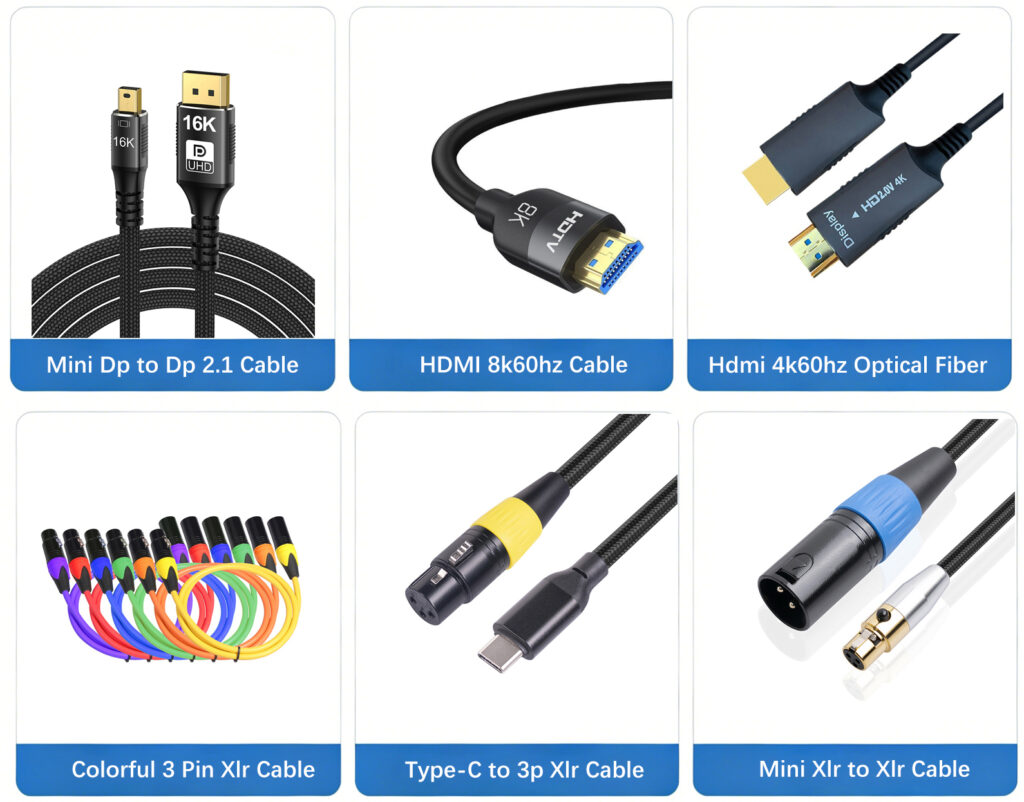
This is one of the most common questions people search. The short answer: a certified HDMI 2.1 (Ultra High Speed) cable is recommended for reliable eARC, especially at longer lengths or with demanding setups.
Here’s why:
- eARC officially requires an HDMI 2.1 connection and is part of the HDMI de ultra alta velocidad specification.
- While some HDMI 2.0 cables with Ethernet may pass basic eARC, they often drop support at longer distances (roughly beyond 5–10 meters / 15–30 ft).
- Para 4K@120Hz video + lossless audio simultaneously, you need the full 48 Gbps bandwidth of a certified cable.
Practical rule: For typical soundbar setups (under 5 m), a good certified eARC HDMI cable works reliably. For longer runs or in-wall installation, choose anactive or fiber optic HDMI 2.1 cable with explicit eARC support.
eARC vs Optical (TOSLINK): Which Should You Use?
|
Característica
|
Óptico (TOSLINK)
|
HDMI eARC
|
|
Ancho de banda máximo
|
~384 Kbps
|
~37 Mbps
|
|
Dolby Digital 5.1
|
Sí
|
Sí
|
|
Dolby Atmos / DTS:X
|
No
|
Sí
|
|
Lossless Audio
|
No
|
Yes (TrueHD, DTS:X)
|
|
Channels
|
Up to 5.1 (compressed)
|
Up to 7.1 (lossless)
|
|
Lip-sync
|
Manual
|
Automatic
|
|
Lo mejor para
|
Older soundbars, legacy gear
|
Modern home theaters, Atmos
|
Frequently Asked Questions (FAQ)
Q: What is eARC? eARC (Enhanced Audio Return Channel) sends lossless, high-bitrate audio from your TV back to a soundbar or receiver over one HDMI cable.
Q: Is eARC better than ARC? Yes. eARC supports higher bandwidth and lossless formats like Dolby TrueHD and DTS:X, plus automatic lip-sync.
Q: Do I need an eARC HDMI cable? A certified HDMI 2.1 (Ultra High Speed) cable is recommended for reliable eARC, especially at longer distances.
Q: Can eARC carry Dolby Atmos? Yes. eARC is the way to get lossless Dolby Atmos y DTS:X from your TV to a compatible soundbar.
Q: Does my TV support eARC? Check the port label or your TV’s audio settings. Most recent 4K and 8K TVs include at least one eARC port.