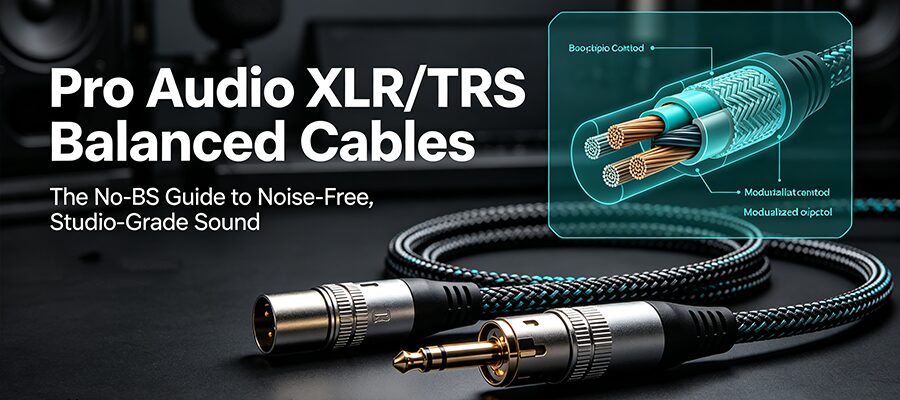
Why Balanced Cables Matter More in 2026 Than Ever
The core noise-canceling design of balanced cables is decades old, but it solves modern problems unbalanced cords, cheap USB cables, and even software cannot:
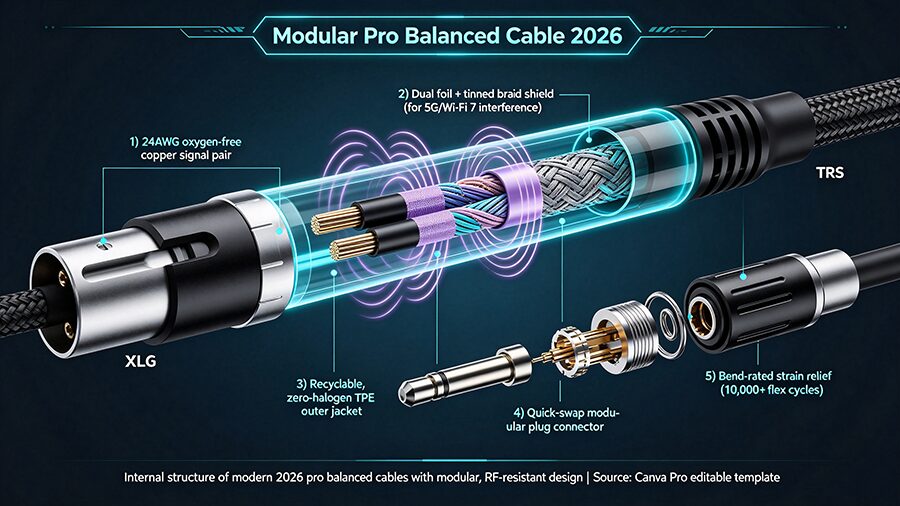
Balanced cables use 3 isolated conductors (two matched signal wires + a grounded dual shield) to send two identical, phase-inverted signals down the line. When RF interference from Wi-Fi 7 routers, 5G small cells, or multi-device wireless charging pads creeps in, the phase alignment cancels 99.9% of buzz before it reaches your interface. No amount of AI noise removal can fix the phase warp or crosstalk bad cables introduce at capture — AI only hides buzz by shaving off high-end clarity.
XLR vs TRS vs USB-C Balanced: Which Do You Need?
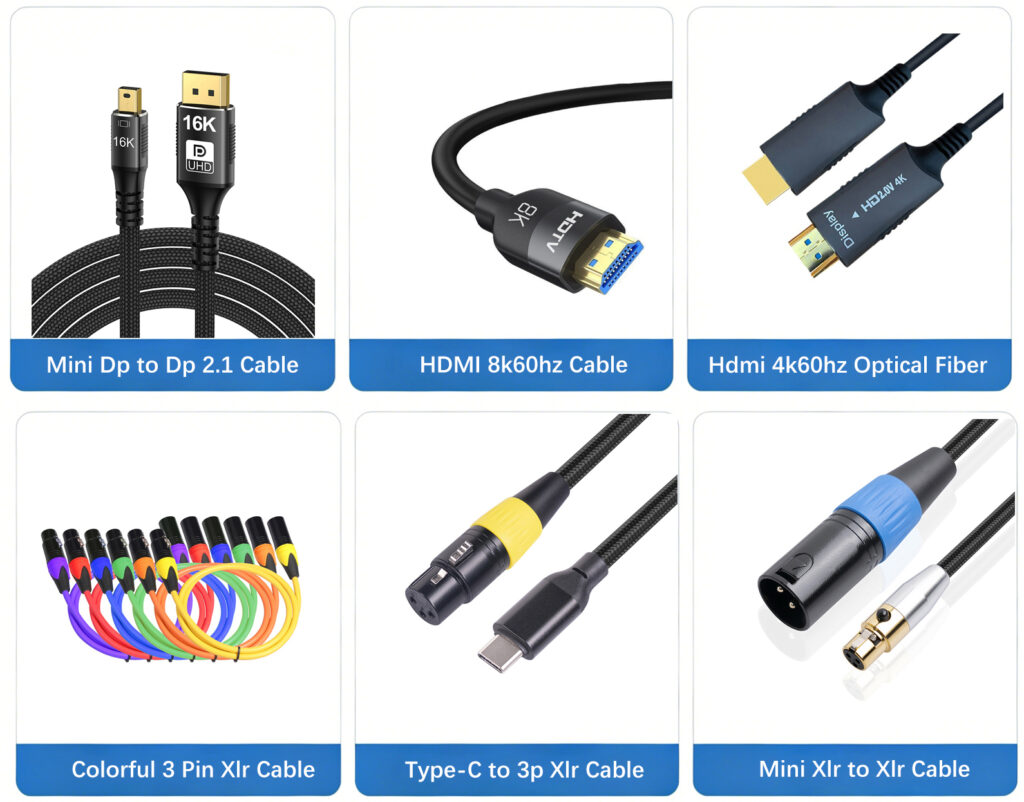
Balanced audio delivers identical noise-canceling performance across connector types — the plugs are just built for different 2026 use cases. Use this up-to-date comparison to avoid mismatches:
| Feature | Modern Balanced XLR (2026 Standard) | Balanced 1/4″ TRS (2026 Standard) | Balanced USB-C TRS (2026 New Form Factor) |
|---|---|---|---|
| Physical Design | 3-pin locking circular connector, nickel-free ruthenium contacts | 1/4″ plug with 2 black insulator rings, low-profile slim shell | USB-C plug with isolated audio conductors + ESD shielding — not a standard phone charge cable |
| Top 2026 Use Cases | AI broadcast mics, spatial audio field recording, live stage runs >50ft, powered PA systems | Spatial audio studio monitor feeds, synth/outboard rack patching, headphone amp outputs | 2025+ portable interfaces, battery-powered field recorders, USB-C desktop monitors, mobile livestream rigs |
| Max Noise-Free Run | 250ft (76m) with dual-shield design | 120ft (36m) | 10ft (3m) (longer runs require active signal repeaters) |
| Standout Perk | Locking connection = no mid-set pullouts, compatible with 60+ years of legacy XLR gear | Slim fit for 2026 ultra-thin rackmount gear, no twist lock for fast studio patching | Dongle-free connection to phones/tablets for on-the-go recording |
| Critical Red Flag | Plastic-shell connectors without strain relief | Plugs with only 1 insulator ring (unbalanced TS guitar cable) | Repurposed USB-C charging cables — no isolated shielding = constant RF static |
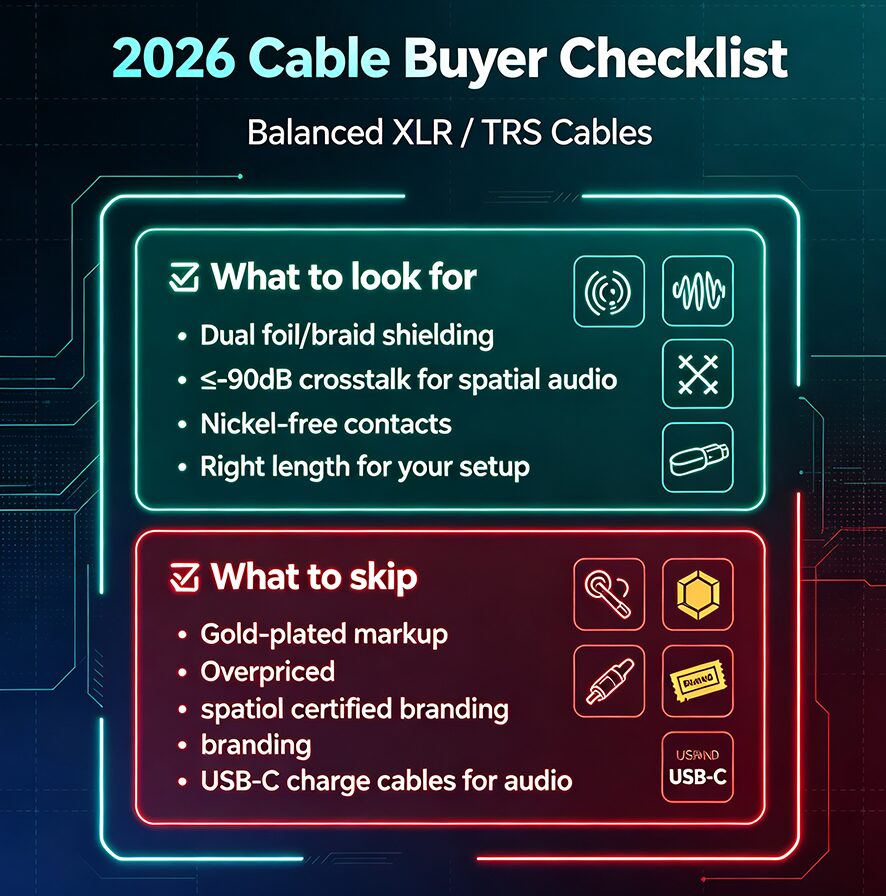
3 Rules for Buying Pro XLR/TRS Cables That Don’t Suck
Quick FAQ
Q: Do I still need analog balanced cables now that Dante/AVB network audio is mainstream?
A: For large stadium/venue installs, network audio is fantastic — but 78% of touring engineers surveyed in 2025 still carry a full set of analog XLR/TRS cables as zero-latency, zero-crash backups for network failures. They’re unbeatable for small studios and portable rigs with no configuration required.
Q: Will XLR-to-TRS adapters hurt my signal quality?
A: As long as the adapter is properly wired for balanced signal, you’ll get zero quality loss. Avoid chaining more than one adapter to prevent loose connection points.
Q: How long will a good balanced cable last?
A: A modular dual-shield cable will last 15–20 years — you’ll only need to replace worn plugs every 3–5 years for a few dollars, instead of replacing whole disposable cheap cables every 1–2 years.