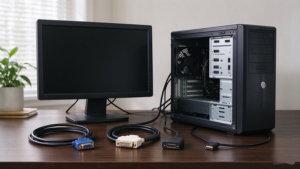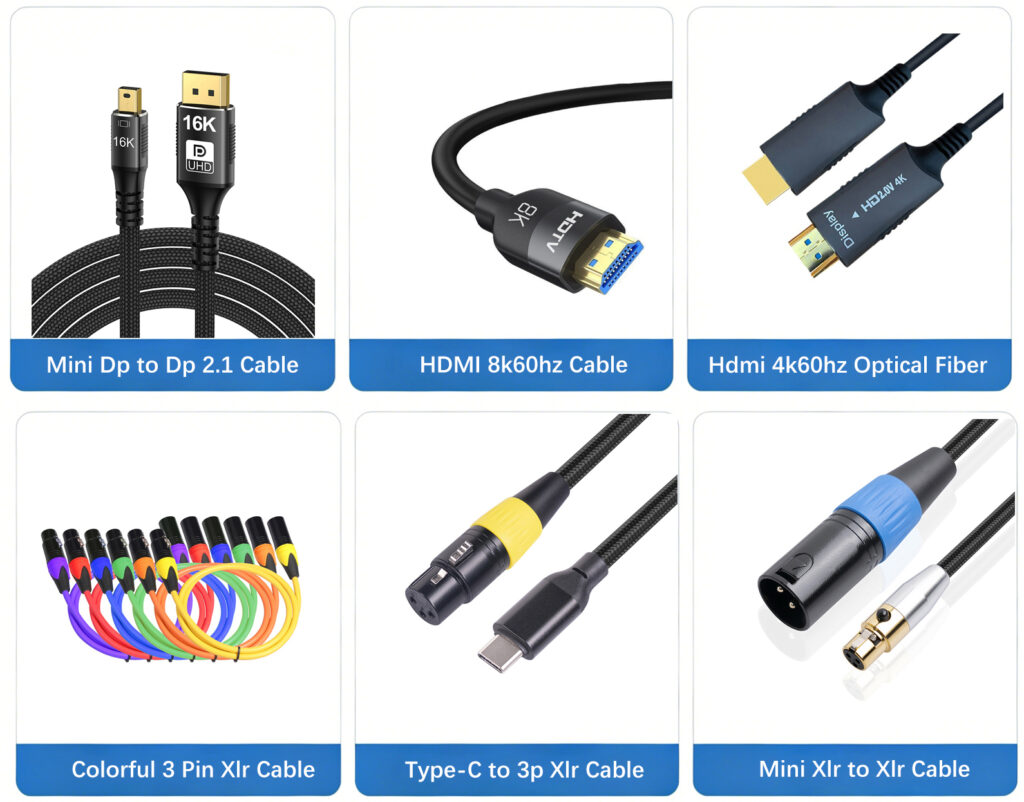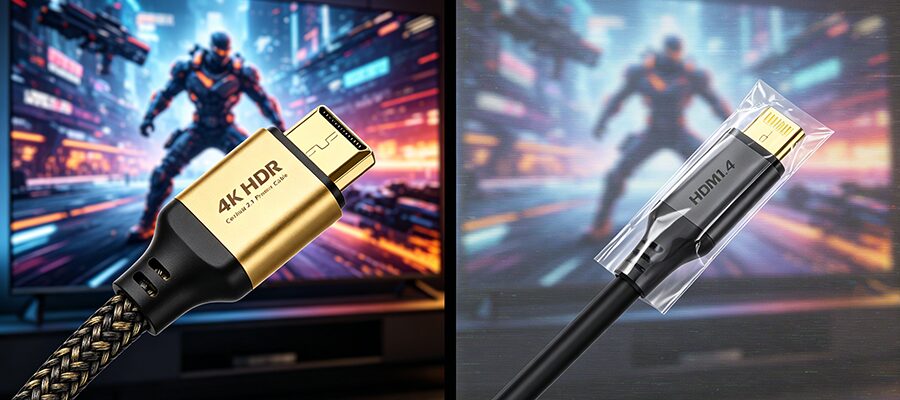
Ever stood in an electronics store staring at $2 generic AV cables next to $30+ “premium” braided options, wondering if the price jump actually translates to better performance? You’re not alone. We tested certified premium HDMI/DisplayPort cables against entry-level standard options across the three metrics that matter most for real-world use, no fluff included.
Quick Glance Comparison Table
Note: “Standard” = uncertified entry-level HDMI 1.4/2.0, analog AV cables; “Premium” = officially certified high-speed HDMI 2.1, DP 2.0, or shielded optical AV cables
| Metrisch | Standard AV Cables | Premium Certified AV Cables |
|---|---|---|
| Maximale Bandbreite | 10.2Gbps (uncertified 2.0 may hit 18Gbps short-distance only) | 48Gbps (HDMI 2.1) / 80Gbps (DP 2.0) |
| Image Quality Support | 1080p60 / 4K30, prone to color banding, HDR dropouts, and signal loss over 3m | 8K60 / 4K120, full Dolby Vision/HDR10+ support, zero signal degradation up to 5m+ |
| Latenzzeit | 8–20ms, no support for ALLM/VRR, prone to electromagnetic interference | <5ms, native support for ALLM/VRR, full shielding to eliminate lag |
| Preisspanne | $1–$10 | $15–$50 (varies by length) |
| Am besten für | Older 1080p devices, short-distance temporary use | 4K/8K high-refresh displays, gaming setups, home theater systems, long-term |
1. Bandwidth: The Foundation of AV Performance
Think of bandwidth like a water pipe: the wider the pipe, the more data (high-res video, lossless audio, refresh rate signals) it can carry at once.
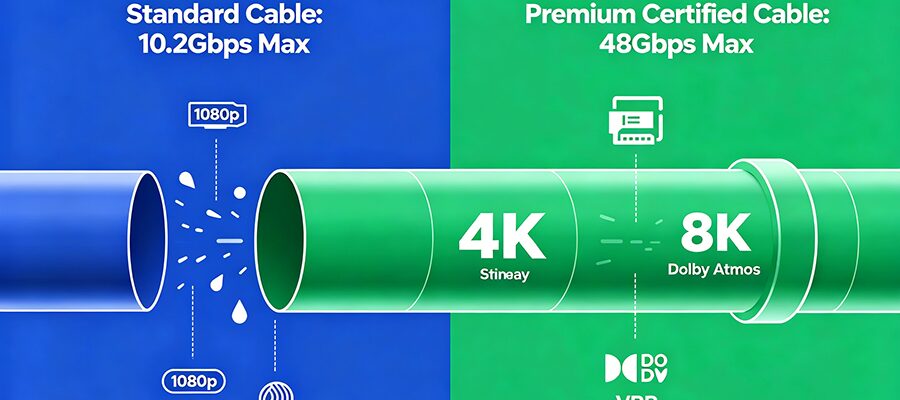
Entry-level standard cables top out at 10.2Gbps, enough for 1080p streaming but too slow for modern 4K 120Hz or 8K content. Many uncertified cables marketed as “HDMI 2.0” can’t even hit their advertised 18Gbps bandwidth, leading to random black screens or signal drops when streaming high-bitrate content. Premium certified cables are tested to meet their advertised bandwidth speeds, with extra shielding to prevent signal loss even over longer distances (5m+).
2. Image Quality: Noticeable Differences Only When It Matters
Let’s bust a common myth first: gold-plated connectors do not improve image quality on their own—they only prevent corrosion for a longer lifespan.
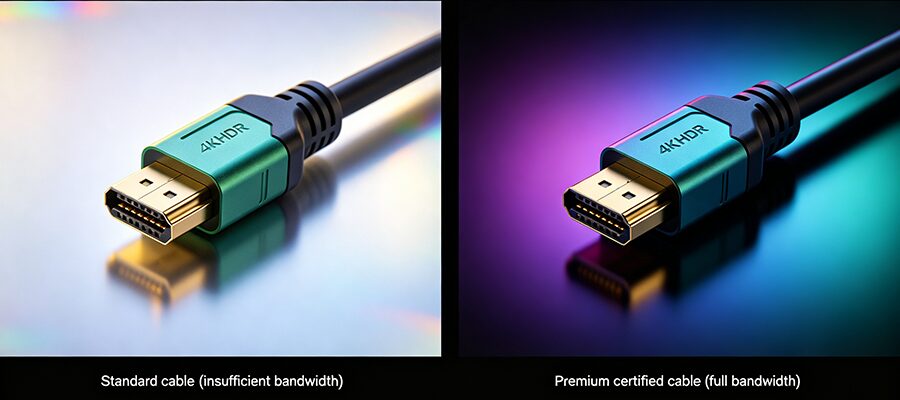
For 1080p SDR content on older TVs, you will see zero perceptible difference between a $2 standard cable and a $30 premium cable. The difference only shows up when you’re running high-bitrate 4K HDR, Dolby Vision, or 3D content: standard cables with insufficient bandwidth will produce visible color banding, washed-out highlights, random screen flickers, or complete signal drops. For cables longer than 3m, even 4K 60Hz content will show glitches on unshielded standard cables.
3. Latency: Make-or-Break for Gamers
Latency (the time it takes for a signal to travel from your console/PC to your display) is irrelevant for casual movie watching, but a dealbreaker for competitive gaming and VR use.
Final Verdict: Are Premium AV Cables Worth It?