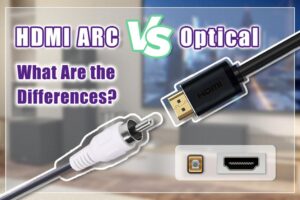
HDMI ARC vs Optical: What are the Differences?
In the past, a coaxial cable was used to transmit audio and video. But then it was gradually replaced by HDMI and digital optical. It is known that the quality of audio can largely affect your experience. With the birth of HDMI ARC, you may struggle to choose HDMI ARC or digital optical. To better understand the differences between HDMI ARC and digital optical, you need to dive into our article. What is HDMI ARC? HDMI ARC means Audio Return Channel, first introduced in HDMI 1.4 standard. Before the introduction of HDMI 1.4, the HDMI port only allows for one-direction transmission from source equipment