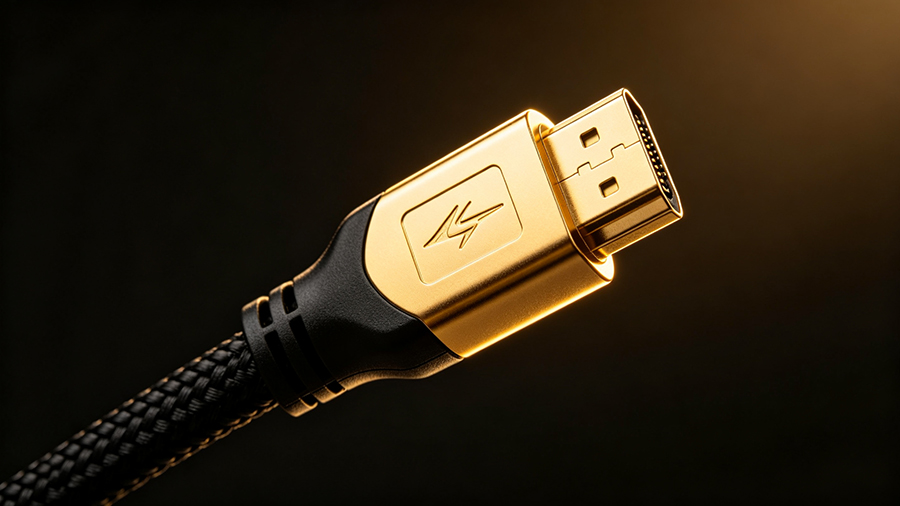
Walk into any electronics store or scroll any shopping site and you’ll find rows of HDMI cables advertising 24K gold-plated connectors. Marketing teams would love you to believe a gold plated HDMI cable unlocks sharper pictures, richer colors, and smoother gameplay. But is that true? Is a gold plated HDMI cable worth it, or is gold plating on an HDMI connector one of the biggest upsells in consumer tech?
In this complete guide, we separate engineering fact from marketing fiction. You’ll learn exactly what a 24K gold HDMI connector does, when a corrosion resistant HDMI cable genuinely matters, and — most importantly — the real factors that determine HDMI cable performance for your 4K TV, PS5, Xbox Series X, gaming PC, or home theater.
What Does a Gold-Plated HDMI Connector Actually Do?
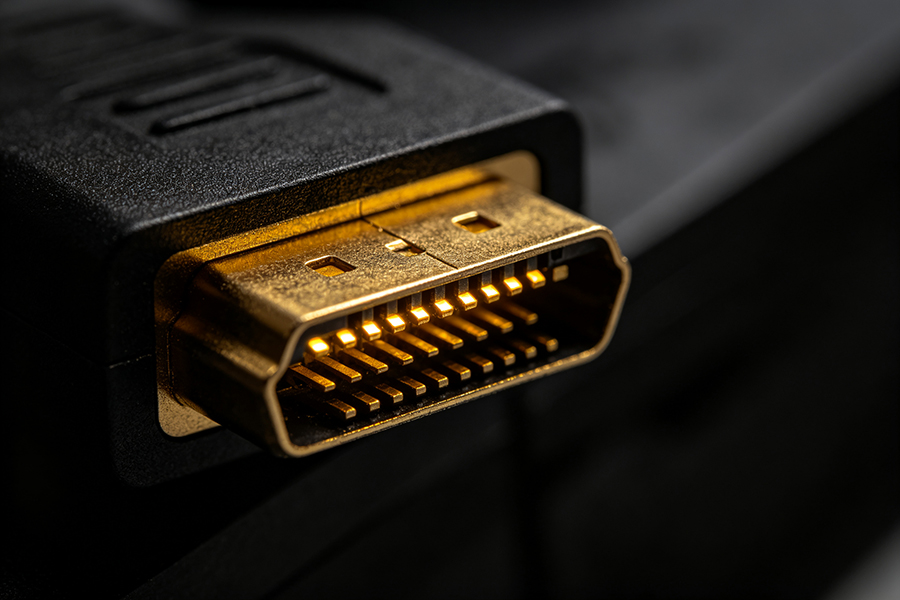
Gold plating is a thin layer of gold deposited over the connector’s contact pins, usually on top of a nickel under-layer. Its only real job is surface protection. Because gold is one of the most chemically inert metals on Earth, a gold plated HDMI connector resists oxidation and corrosion that slowly attacks bare copper or nickel contacts.
Here’s the part most shoppers get wrong: gold is not a better electrical conductor than copper or silver. In fact, copper and silver conduct electricity better than gold. Gold is chosen for connectors because it never rusts or tarnishes in air and moisture — keeping contact resistance stable for years of plugging and unplugging.
Gold Plating Myths vs. Facts
The confusion about gold plated HDMI cables comes from decades of audio-video marketing. Let’s clear it up with a myth-vs-fact table you can bookmark:
| Marketing Claim | Myth or Fact? | What Actually Happens |
|---|---|---|
| “Gold makes the picture sharper” | Myth | HDMI is digital. A certified gold plated HDMI cable and a certified nickel cable output identical pixels at 4K, 8K, and HDR. |
| “Gold increases bandwidth / speed” | Myth | Bandwidth is set by the HDMI version and speed rating (e.g., 48Gbps for HDMI 2.1, 96Gbps for HDMI 2.2) — not by connector plating. |
| “Gold reduces input lag for gaming” | Myth | Latency is determined by the TV/console processing and VRR/ALLM support. Plating plays no role in input lag. |
| “Gold prevents rust and corrosion” | Fact | Gold’s inert nature resists oxidation, making a gold plated HDMI cable more reliable in humid, coastal, or dusty environments. |
| “Gold makes the cable last longer” | Fact | Stable contact resistance and wear resistance mean fewer intermittent drops over years of frequent plugging/unplugging. |
When a Gold-Plated HDMI Cable Is Actually Worth It
A gold plated HDMI cable earns its price premium in specific situations. Ask yourself whether you live in any of these scenarios:
- High-humidity or coastal areas. Salt air and moisture accelerate corrosion. A corrosion resistant HDMI cable with gold-plated connectors protects the plug from rusting into the port.
- Frequent plugging and unplugging. Gold plating improves wear resistance, keeping the connection firm for gaming setups, projectors, and equipment racks that get moved often.
- Long-term fixed installations. In-wall, ceiling-projector, or home theater runs that are hard to replace benefit from the long-term stability of gold-plated contacts.
- Harsh or industrial environments. Gold plating is standard in networking and industrial hardware that must survive years of exposure without service calls.
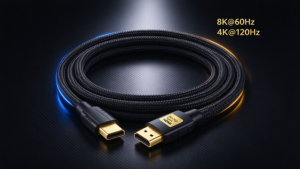
For the average living room in a dry climate, however, the honest answer to “are gold plated HDMI cables worth it” is often no — a properly certified nickel-plated HDMI cable delivers the same 4K 120Hz and 8K 60Hz picture.
What Actually Determines HDMI Cable Performance
If gold plating doesn’t improve the picture, what does? Real HDMI cable performance comes down to these factors, in this order of importance:
1. Certification & Bandwidth
- Ultra High Speed HDMI certification (48Gbps) for 4K 120Hz / 8K 60Hz
- Ultra96 (96Gbps) for HDMI 2.2 and future 12K/16K
- Scan the official QR code to verify authenticity
2. Build Quality & Materials
- Oxygen-free copper (OFC) conductors
- Shielding against EMI/RFI interference
- Strain relief, connector housing, and — yes — plating quality
The speed rating and official certification matter far more than the plating on the connector. An uncertified “8K gold plated HDMI cable” that can’t sustain 48Gbps will black-screen under 4K 120Hz + HDR load, while a certified nickel-plated Ultra High Speed cable will run flawlessly. Certification beats plating. Every time.
Gold-Plated vs. Nickel-Plated HDMI Connectors
Here’s a side-by-side comparison to help you decide between a gold plated HDMI cable and a standard nickel-plated one:
| Factor | Gold-Plated HDMI | Nickel-Plated HDMI |
|---|---|---|
| Corrosion resistance | Excellent — resists oxidation and tarnish | Moderate — can tarnish over time |
| Contact resistance (long term) | Stable for years, fewer intermittent drops | Can rise with oxidation, occasional dropouts |
| Picture / audio quality | Identical (digital signal) | Identical (digital signal) |
| Durability (plug cycles) | Higher wear resistance | Good for normal use |
| Price | Higher premium | Budget-friendly |
| Best for | Humid/coastal areas, frequent unplugging, fixed installs | Dry indoor setups, budget builds, short runs |
Buying the Right HDMI Cable: A 2026 Checklist
Whether you choose a gold plated HDMI cable or a standard one, use this checklist so you never overpay again:
- Match the speed rating to your devices. For PS5, Xbox Series X, or a 4K 120Hz OLED, buy an HDMI 2.1 cable with full 48Gbps bandwidth.
- Look for official certification. Ultra High Speed (and, from 2026, Ultra96 for HDMI 2.2) labels with scannable QR codes. Avoid vague “8K ready” claims.
- Choose the right length. Under ~10 ft (3m) copper is ideal; over 25 ft (7.6m) choose active or fiber optic HDMI to prevent signal loss.
- Check build quality, not just gold. Strain relief, braided jacket, solid housing, and consistent soldering matter as much as a 24K gold plated connector.
- Treat gold plating as a bonus, not the reason to buy. If your environment is dry and stable, a certified nickel-plated cable performs identically.
Gold-Plated HDMI Cable FAQ
Are gold-plated HDMI cables worth it?
Gold-plated HDMI cables are worth it mainly for corrosion resistance and long-term durability in humid, coastal, or frequently used setups. Gold plating does not improve picture quality, bandwidth, or input lag because HDMI is a digital signal. In dry, indoor, fixed setups, a certified nickel-plated HDMI cable performs identically.
Does gold plating improve 4K or 8K picture quality?
No. HDMI carries digital data, so a gold plated HDMI cable and a standard certified cable deliver the exact same 4K, 8K, HDR, and refresh rate. Picture quality is determined by the HDMI version, bandwidth (e.g., 48Gbps for HDMI 2.1), and official Ultra High Speed certification — not the plating.
Gold-plated vs nickel-plated HDMI: which lasts longer?
Gold-plated connectors generally last longer in humid, salty, or dusty environments because gold resists oxidation, keeping contact resistance stable over years. Nickel connectors can tarnish over time and occasionally cause intermittent signal drops. In a clean, dry living room both can last for years.
Is 24K gold plating on HDMI cables a scam?
It’s over-hyped, but not exactly a scam. The corrosion-resistant property of a 24K gold HDMI connector is real and can improve reliability in demanding environments. The scam part is paying a large premium believing gold improves video quality — it does not. Buy on certification and build quality, not just gold.
What HDMI cable should I buy in 2026?
For 4K 120Hz, 8K 60Hz, PS5, Xbox Series X, and high-end PC gaming, buy an officially certified Ultra High Speed HDMI 2.1 cable (48Gbps) with solid build quality. For future 12K/16K readiness, look for Ultra96 (HDMI 2.2) cables. Match cable length to your run — short copper for most setups, fiber optic HDMI for 10m+ runs.